
Syed Shayan Real Estate Archive
Syed Shayan Real Estate Archive
From Real Estate History
2 Historical Event found
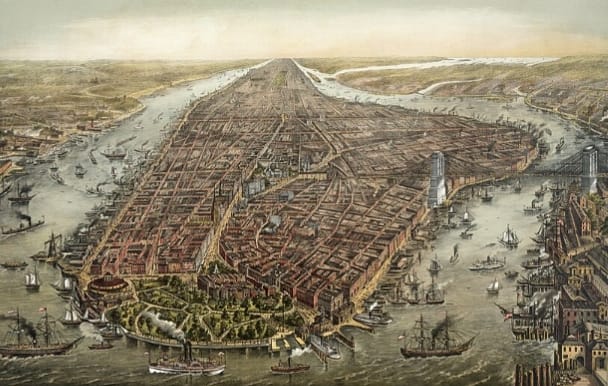
On 10 July 1690, authority in the Province of New York shifted firmly under the government established in the name of King William III and Queen Mary II during the aftermath of the Glorious Revolution. Although this was primarily a political event, it had lasting consequences for the future of land ownership, property administration, urban planning, and real estate development in what would become New York City. During the late seventeenth century, uncertainty over colonial authority had created confusion regarding land grants, property rights, taxation, and municipal governance. As the new administration consolidated control, the colony began restoring confidence in legal institutions responsible for managing land and property. This strengthened the framework through which deeds, land patents, municipal regulations, and property transactions could be recognized and enforced. The stabilization of government encouraged investment, trade, and settlement, helping New York evolve from a colonial port into one of the world's most valuable real estate markets. Over the following decades, clearer systems for recording land ownership, resolving property disputes, and administering real estate laid the institutional foundation for the city's long-term urban expansion. For historians of the built environment, this period represents an important milestone because stable governance and legally recognized property rights are essential prerequisites for organized urban growth. The institutions that emerged in the early 1690s ultimately contributed to the development of modern New York's real estate system, influencing land administration practices that continued for centuries.
Read More >
On 30 December 1973, a day of exceptional significance in the industrial and urban history of Pakistan, former Prime Minister Zulfikar Ali Bhutto laid the foundation stone of Pakistan Steel Mills at Bin Qasim, Steel Town, to the east of Karachi, beyond the then urban limits of the city. This project not only became a symbol of Pakistan’s industrial sovereignty but also led to an immediate and notable rise in land values across the surrounding areas of Karachi. Pakistan Steel Mills was established on approximately eighteen thousand six hundred acres of land near Karachi. Spread across such an extensive area, it was not merely an industrial unit but effectively a city within a city. The scale of this development can be understood by comparing it to Sukkur, the third largest city of Sindh, whose present urban area is approximately seventy five square kilometres. The land occupied by Pakistan Steel Mills was comparable to, and in some assessments larger than, the urban footprint of Sukkur. This vast expanse comprised the main industrial complex of the steel mills, the residential settlement of Steel Town, supporting infrastructure, roads, railway connections, and essential utilities. From a research perspective, it would not be inaccurate to describe Pakistan Steel Mills as one of the most prominent examples of large scale industrial land use undertaken by the state at that time. Its impact extended beyond industrial production to influence national patterns of urban expansion and land utilisation. As a result of this project, extensive coastal and semi agricultural land near Karachi was converted to industrial use. Over thousands of acres, the central steel complex, residential colonies, roads, utilities, and auxiliary infrastructure were developed, giving rise to a fully integrated industrial and urban zone in the Bin Qasim area. In parallel, Steel Town emerged as a planned residential city, designed specifically to accommodate industrial workers and government employees. From the perspective of real estate and urban development, the establishment of Pakistan Steel Mills triggered an extraordinary expansion of Karachi’s urban boundaries. Coastal and underdeveloped land underwent a fundamental transformation, land values increased significantly, and a new urban model emerged based on the interrelationship between port activity, industry, and residential settlement. This project became a defining example of large scale industrial land use by the state in Pakistan. From an archival standpoint, 30 December 1973 stands as the date that permanently reshaped the geographical, urban, and property landscape of Karachi’s eastern coastline. It is preserved as a milestone in the history of industrial real estate development in Pakistan.
Read More >